Why It Matters
The hidden risk inside an undocumented home.
Estate and facilities operations is the documented, preventive management of a property’s mechanical, structural, and financial systems. Without it, even the most valuable homes operate in the dark—and the costs compound quietly.
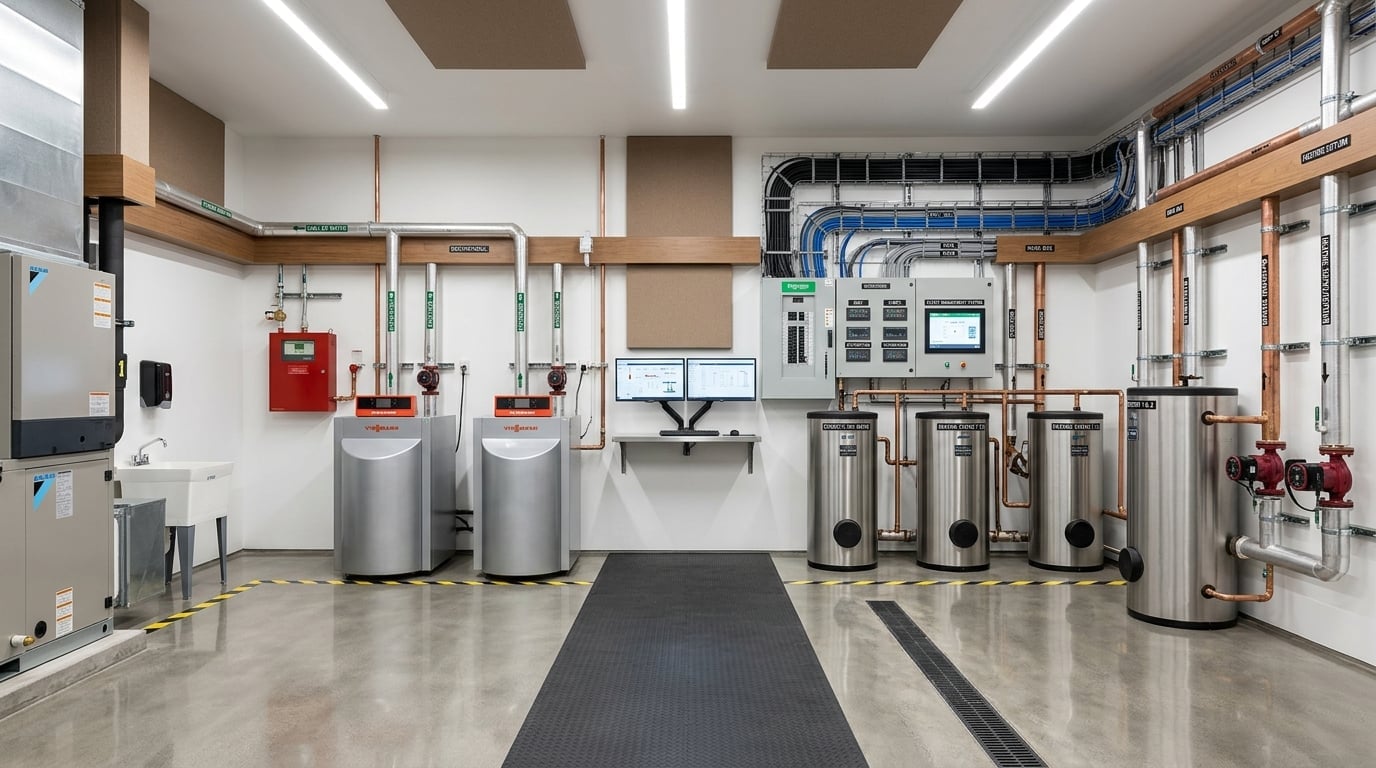
What is the Black Box problem?
Most luxury homes are a black box. The critical knowledge that keeps the property running—which contractor installed the radiant heating system, when the fire suppression was last inspected, what brand and model the pool equipment is, where the warranties are filed—lives inside one person’s memory. Maybe it’s the estate manager. Maybe it’s a long-tenured caretaker. Maybe it’s the original builder.
The problem is simple and serious: that knowledge is not documented. It exists nowhere permanent. There is no searchable record, no digital logbook, no institutional memory. The home’s operational history—its entire maintenance biography—is stored in the most fragile container imaginable: a single human brain.
This is the Black Box problem, and it affects the majority of high-value residential properties in the United States.
How does institutional memory disappear?
People leave. The estate manager takes a new position. The caretaker retires. The builder moves on to another project. The property changes hands. In every case, the departure triggers the same quiet catastrophe: years of accumulated operational knowledge—vendor relationships, maintenance schedules, system quirks, warranty terms—vanish overnight.
The new team inherits walls and mechanical rooms, but not the story behind them. They don’t know when the boiler was last serviced, which HVAC zones run on what schedule, or that the irrigation system has a known valve issue that requires annual attention. They start from zero—and the estate pays the price in rediscovered problems, duplicated vendor costs, and preventable failures.
This is not a personnel problem. It is a systems problem. Without documented institutional memory, every transition is a reset—and every reset is expensive.
How does deferred maintenance compound?
Deferred maintenance is not a single event. It is a pattern of small oversights that compound silently over months and years until the consequences become unavoidable—and expensive.
A skipped annual HVAC filter change reduces efficiency by 5–15% per year. Left unchecked for three years, the added strain can shorten compressor life by half—turning a $200 service call into a $15,000 replacement. A roof flashing repair that goes unlogged may void the manufacturer’s warranty, leaving the homeowner exposed to a full replacement cost years ahead of schedule.
Industry research consistently shows that every dollar of deferred maintenance generates four to five dollars in future capital repair costs. For a luxury estate with dozens of interconnected systems—HVAC, plumbing, electrical, structural envelope, landscaping, snow management, fire safety—the compounding effect is significant.
Reactive Approach
- • Emergency calls at premium rates
- • Voided warranties from missed service
- • Cascading system failures
- • No visibility into upcoming costs
- • Vendor dependence without accountability
Preventive Approach
- • Scheduled maintenance at standard rates
- • Preserved warranties with documented service
- • Early detection before failure
- • Capital forecasting and reserves planning
- • Vendor accountability with SLAs and records
What does documentation protect?
A documented estate is a knowable estate. When every system, service record, vendor relationship, and capital plan is cataloged and accessible, the property gains something that most luxury homes lack: institutional memory that endures regardless of who manages the property.
Value
Documented properties demonstrate provable care history—supporting appraised value, insurance claims, and resale positioning.
Time
New managers, contractors, and owners inherit a complete operational record. No starting from zero. No rediscovering known issues.
Optionality
With total financial clarity and capital forecasts, owners make decisions from strength—not from the pressure of an emergency.
Insurability
Documented maintenance history, system records, and risk mitigation support favorable insurance terms and faster claims resolution.
This is why Highline exists.
We build the documented, preventive operating system that luxury estates require but rarely have. Three pillars—Document Everything, Prevent Problems, Plan for the Future—form an integrated approach that replaces the black box with institutional clarity.